Policy
News
Less Busy. More Human.
Less Busy. More Human.
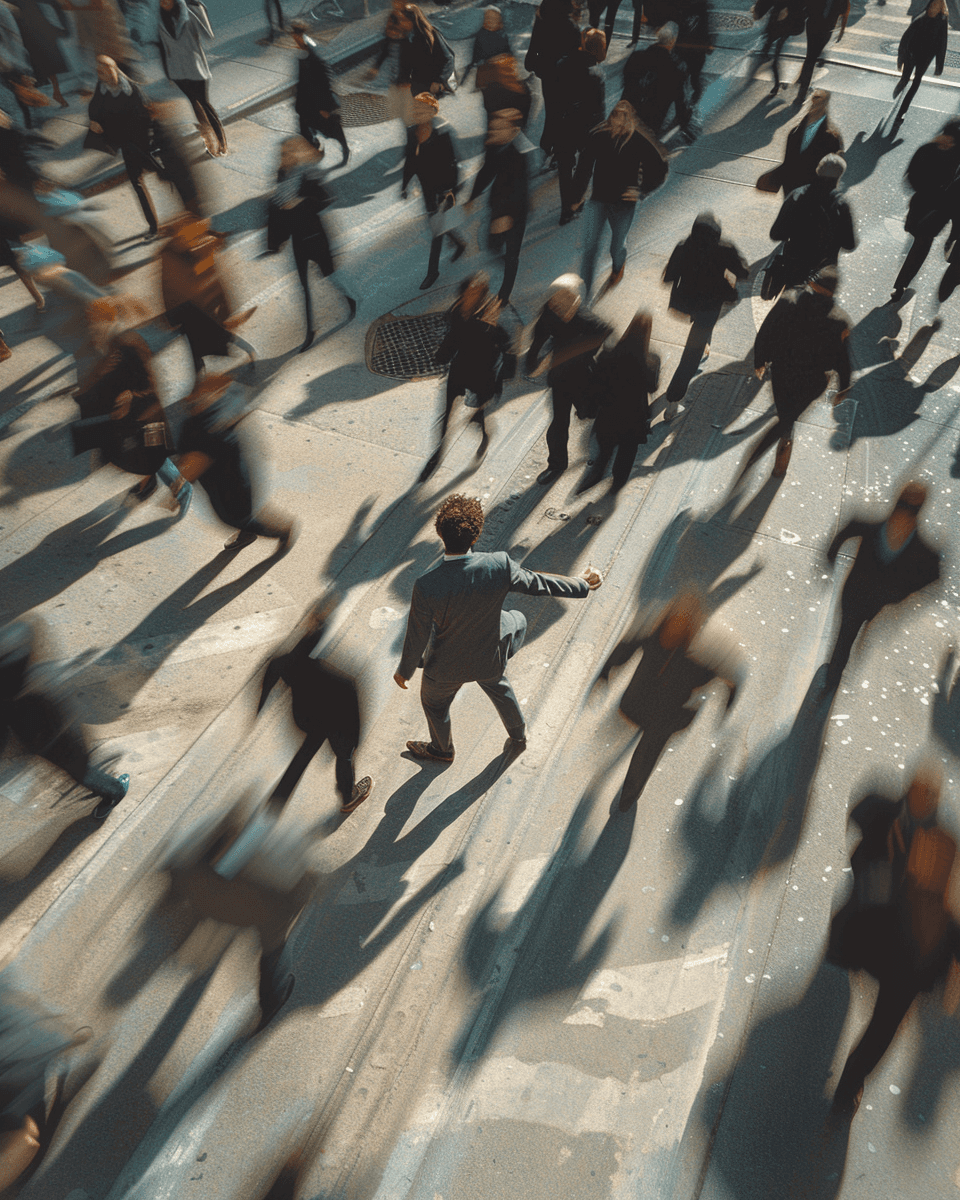
Busyness has become a virtue. Not just a condition — a signal. A way of communicating to the world, and perhaps to ourselves, that we are serious people doing important things. We wear packed calendars and late replies and the phrase "I've been absolutely slammed" as badges of honour, evidence that we are in demand, that our time is scarce, that we matter.
This is a relatively recent development. And it is making us worse at almost everything we claim to value.
The Busyness Trap
There is a distinction worth drawing early, because it gets blurred constantly in this conversation. Being busy is not the same as doing meaningful work. Being productive is not the same as being effective. And being always available is not the same as being genuinely present — for colleagues, for clients, for the people in our lives who are not on our calendar.
These distinctions sound obvious when stated directly. They are almost universally ignored in practice.
The reason is partly structural. Most organisations measure inputs far more easily than they measure outputs, and time is the most visible input of all. Presence gets rewarded even when it produces nothing. Busyness signals commitment even when it masks confusion. The person who leaves at five is read as less dedicated than the person who stays until eight, regardless of what either of them actually produced during those hours.
Over time, this creates a culture in which looking busy becomes more important than being effective — in which the performance of work crowds out the work itself. Most people who have spent time in a large organisation will recognise the phenomenon. Fewer are willing to name it plainly, because naming it requires acknowledging that a substantial portion of what passes for professional life is, at some level, theatre.
What Busyness Costs
The costs are not only organisational. They are deeply personal, and they accumulate slowly enough that they are easy to miss until they are very difficult to reverse.
Chronic busyness degrades cognitive function. The research on this is consistent and has been for decades: sustained cognitive overload reduces the quality of decision-making, narrows creative thinking, and impairs the kind of long-range, reflective thought that most complex work requires. The busiest people in an organisation are often, paradoxically, the least capable of doing its most important thinking.
Chronic busyness also erodes relationships. Not just the personal relationships that get squeezed into the margins of an overfull schedule, but the working relationships that make organisations function. Trust, collaboration, and genuine collegiality all require time — unscheduled, unoptimised time — that busyness systematically eliminates. We have replaced it with processes, platforms, and stand-up meetings, and wondered why our teams feel disconnected.
And chronic busyness crowds out the interior life. The thinking that happens in the shower, on a walk, in the unstructured half-hour between tasks — this is not wasted time. For knowledge workers, it is often where the most valuable cognitive work occurs. An always-full schedule is, among other things, an attack on the conditions that make good thinking possible.
The Organisations Getting This Right
A growing number of organisations have begun to take this seriously — not as a wellness initiative but as a performance strategy. They have noticed that their best people are not their busiest people. They have noticed that their most creative outputs tend to emerge from conditions of relative spaciousness rather than maximum pressure. And they have begun, carefully and experimentally, to redesign their working cultures accordingly.
The changes are rarely dramatic. Protected time for deep work. Meeting-free mornings. A genuine, enforced norm around after-hours communication. The four-day week, in some cases. What these interventions have in common is that they treat time and attention as finite resources worth protecting, rather than elastic commodities to be stretched to fill whatever is demanded of them.
The results, consistently, are better work, lower attrition, and teams that report feeling trusted rather than surveilled. None of this is surprising. It is the straightforward consequence of treating people as people rather than as units of productive capacity.
A Different Measure
The deeper question — the one that busyness prevents us from sitting with long enough to answer — is what we are actually trying to achieve.
Most organisations have a sophisticated answer to this question at the level of strategy. They have goals, metrics, OKRs, and quarterly targets. What they rarely have is an honest answer at the level of culture: what does it feel like to work here, and is that feeling consistent with the kind of work we want to do and the kind of people we want to be?
Busyness fills the space where that question would otherwise live. It provides a sense of purpose and forward motion that substitutes for the harder work of deciding what actually matters. And it does so at considerable cost — to the quality of the work, to the wellbeing of the people doing it, and to the organisations that depend on both.
Less busy does not mean less committed. It does not mean less ambitious or less rigorous or less serious about the work. It means making enough room for the work to actually be done well — and for the people doing it to remain, over time, capable of doing it.
That is not a soft goal. It is the only sustainable one.
The Human Part
The title of this piece is borrowed from a talk I give to leadership teams who are ready to ask harder questions about how their organisations work. The human part is always the part that gets cut first — the slack in the schedule, the time for reflection, the space between tasks where people remember who they are outside of their job titles.
It is also, reliably, the part whose absence is most felt. Not in the quarterly numbers, which often look fine long after the damage has been done. But in the quiet ways that organisations hollow out: the best people leaving, the ideas getting worse, the sense that everyone is performing competence rather than exercising it.
More human is not a slogan. It is a design principle. And it starts with the willingness to be, just a little, less busy.
Dr. Lena Vosello is a labour economist and speaker on the future of work. Her research on working hours and productivity has been published in the Journal of Labour Economics and cited by policymakers across Europe.